

Choosing the Right CCTV Camera Type for Your Project
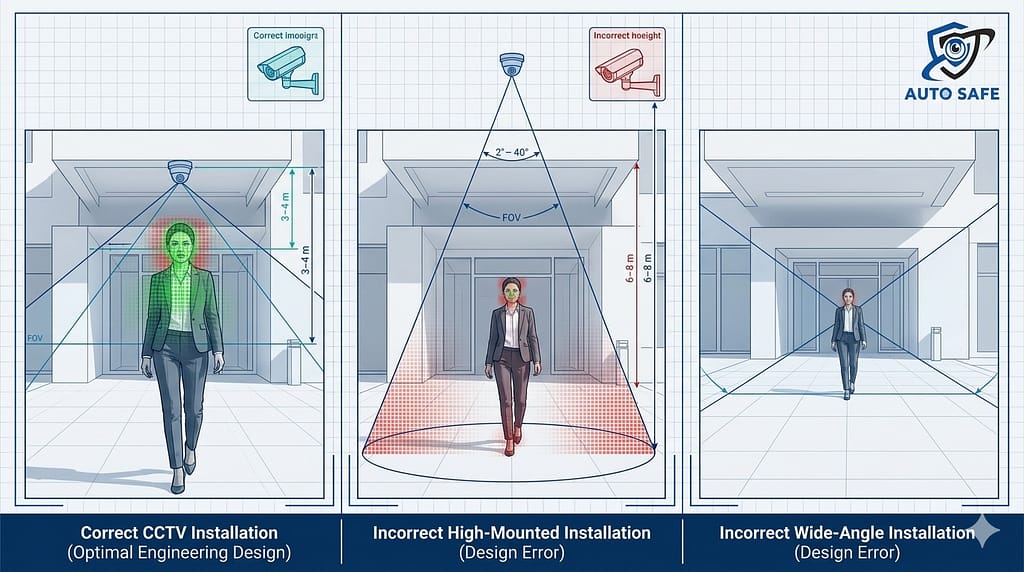
Choosing the Right CCTV Camera Type for Your Project in Egypt: Dome, Bullet, PTZ, and More Understanding CCTV Camera Types Beyond Appearance Selecting a CCTV camera is often approached from a visual or budget perspective, but in reality, camera type is an engineering decision. Each form factor—dome, bullet, PTZ, or turret—is designed to solve a specific surveillance challenge.In modern security projects across Egypt, the effectiveness of a CCTV system depends on aligning camera type with operational requirements such as coverage area, environmental conditions, and level of control.A mismatch between camera type and application often leads to blind spots, reduced image usability, and unnecessary system complexity. The Functional Role of Each Camera Type Each camera type is engineered with a specific purpose in mind, and understanding these roles is critical for building an efficient surveillance system.Dome cameras are typically used in indoor environments where discretion and wide coverage are required. Their compact design makes it difficult to determine the viewing direction, which can act as a deterrent in controlled spaces such as offices, retail stores, and lobbies.Bullet cameras, on the other hand, are designed for long-range outdoor monitoring. Their extended housing supports larger lenses, making them suitable for perimeter protection, parking areas, and open spaces where distance coverage is critical.PTZ (Pan-Tilt-Zoom) cameras introduce dynamic control into surveillance systems. Instead of fixed coverage, they allow operators to actively monitor and zoom into specific events in real time. These cameras are commonly used in large-scale environments such as industrial facilities, public infrastructure, and high-security zones.Turret cameras offer a balance between dome and bullet designs. They reduce common issues like infrared reflection and are widely used in both indoor and outdoor environments where consistent image quality is required. Camera Type Comparison Table Camera Type Best Use Case Key Advantage Limitation Dome Indoor spaces, offices, retail Discreet design, vandal-resistant Limited long-range capability Bullet Outdoor, perimeter, parking Long-distance visibility Highly visible, fixed direction PTZ Large areas, active monitoring Remote control and zoom flexibility Higher cost and operational complexity Turret Mixed environments Better night performance, less glare Less discreet than dome Matching Camera Type to Surveillance Objective Choosing the right camera type starts with defining what the system needs to achieve. Not all environments require active monitoring, and not all areas benefit from wide coverage.Two key decisions drive camera selection: Whether the area requires fixed monitoring or dynamic control Whether the priority is coverage, detail, or tracking capabilityIn many projects, combining multiple camera types delivers the best results. For example, fixed cameras can provide continuous coverage, while PTZ cameras handle active tracking in critical zones.This layered approach ensures both reliability and flexibility without overcomplicating the system. Environmental and Installation Considerations Camera type selection must also account for real-world conditions, not just technical specifications.Outdoor deployments in Egypt require cameras that can handle high temperatures, dust, and variable lighting conditions. Bullet and turret cameras are often preferred in these environments due to their durability and better heat dissipation.Indoor environments, on the other hand, prioritize aesthetics and controlled lighting. Dome cameras are typically more suitable here, especially in commercial and corporate spaces.Mounting height, exposure to direct sunlight, and night performance requirements all influence which camera type will deliver consistent results over time. Aligning Camera Selection with International Standards Professional CCTV system design follows globally recognized frameworks that focus on performance outcomes rather than hardware selection alone.Organizations such as ASIS International emphasize that surveillance systems must be designed based on operational objectives, risk assessment, and measurable results.For a deeper understanding of these frameworks, refer to Security Industry Standards and Guidelines. Common Mistakes in Camera Type Selection Even well-funded projects can fail to deliver effective surveillance due to poor camera selection decisions. Using PTZ cameras where fixed coverage would provide more consistent monitoring Selecting dome cameras for areas that require long-distance identification Relying on wide-angle coverage instead of properly distributed cameras Ignoring environmental factors such as lighting and temperatureThese mistakes often result in systems that appear complete on paper but fail in real-world scenarios. Engineering Visualization Asset: Camera Type Selection Based on Use Case This section represents a production-ready visualization concept designed to illustrate how different CCTV camera types perform in real-world scenarios.The visual should present a split-scene environment that includes an indoor office area monitored by dome cameras, an outdoor perimeter secured with bullet cameras, a large open area monitored by a PTZ camera, and a mixed-use corridor covered by turret cameras.Each camera type should be shown actively covering its intended area, with overlays indicating field of view coverage zones, monitoring range, control capability, and identification effectiveness levels.The goal of the visualization is to clearly demonstrate that each camera type serves a distinct function and that system performance depends on proper distribution, not uniform selection. Final Insight: The Right Camera is the One That Fits the Purpose There is no single “best” CCTV camera type. The effectiveness of a surveillance system depends entirely on how well each component is aligned with its intended role.A properly designed system uses the strengths of each camera type to create a balanced and reliable security solution. At Autosafe, we approach CCTV system design as an engineering discipline, carefully selecting and integrating camera types based on real operational needs. Across projects in Egypt, our focus remains on delivering systems that are not only technically sound but also practical, scalable, and performance-driven. Explore More Insights Digital Transformation in Egypt | System Integration Solutions October 10, 2026 | by Auto Safe Digital Transformation in Egypt: The Role of System Integration and Smart Building Technologies Digital transformation is changing how organizations operate,… Read More → Smart Hypermarket Security & System Integration: AI CCTV, Access Control, Fire Alarm and AV Solutions September 17, 2026 | by Auto Safe Smart Hypermarket Security & System Integration: AI CCTV, Access Control, Fire Alarm and AV Solutions Modern hypermarkets require more than… Read More → QR Code Turnstile Gates: Complete Guide to QR Access Control in Egypt September 8, 2026 | by Auto Safe QR Code Turnstile Gates: Complete Guide to QR
Choosing the Right CCTV Camera Type for Your Project Read More »